Why do gynecological beds need adjustable stirrups? The answer begins with positioning, access, and patient protection. During pelvic examinations, procedures, and minor surgery, a fixed stirrup may force the legs into one angle. That can create pressure behind the knees, uneven hip rotation, or unnecessary strain on the lower back. An adjustable system allows clinicians to raise, lower, widen, and rotate each leg support more carefully.
Safety is not a marketing detail. It is clinical equipment design. The AORN Guideline for Positioning the Patient warns that lithotomy positioning can contribute to nerve injury, pressure damage, and reduced circulation when alignment is poor. A Mayo Clinic study reported postoperative lower-extremity nerve injury in approximately 1.5 per 1,000 lithotomy-positioned patients (Warner et al., Anesthesiology). The number is small. The consequence is not.
“Positioning is a shared responsibility, not a single-person task,” says Nancy Girard, MSN, RN, CNOR, a perioperative positioning specialist. Her point matters because a stirrup adjustment affects nurses, surgeons, anesthetists, and the patient. A stable, padded support can help reduce sliding while keeping the examination field accessible. It can also shorten repeated repositioning during a busy clinic session.
Still, adjustable stirrups are not a complete safety solution. Incorrect height, rushed transfers, or poor padding can defeat a well-designed bed. Staff training remains essential. The best gynecological beds combine precise adjustment, secure locking, easy cleaning, and visible patient comfort. Small movements matter. That is where safer care begins.
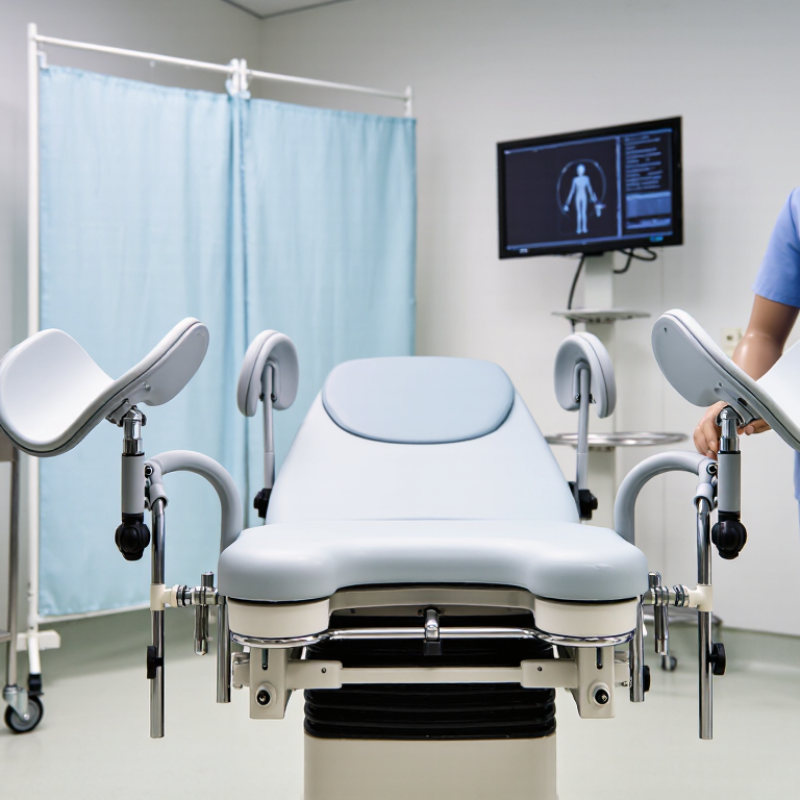
What Adjustable Stirrups Are and How They Work on Gynecological Beds
Why Do China Best Gynecological Beds Need Adjustable Stirrups?
Adjustable stirrups support the legs during pelvic examinations, cervical procedures, and minor gynecological surgery. Each unit usually includes a padded boot, mounting rail, height control, and locking mechanism. The clinician adjusts leg height, angle, and separation from the side of the bed. This creates clearer access without forcing the patient into one fixed position.
Small movements matter. A few centimeters can reduce hip rotation and pressure behind the knee. Some systems move both legs together, while others allow independent adjustment. Independent control helps accommodate different body sizes and limited joint mobility. However, adjustment is not simply mechanical. Staff should check circulation, calf pressure, padding, and ankle alignment before the procedure begins.
The World Health Organization’s Global Patient Safety Report 2024 states that about one in ten patients experiences harm during healthcare, and more than half of this harm is preventable. That finding gives positioning equipment a wider clinical responsibility. AORN’s Guidelines for Perioperative Practice also emphasize neutral alignment, pressure protection, and repeated assessment during care.
Adjustable stirrups support these practices, but they cannot replace trained judgment. That is the uncomfortable part. A well-designed bed may still cause discomfort if staff rush the setup or ignore patient feedback. Better designs should make safe adjustments visible, smooth, and easy to verify. Some controls remain confusing. Human factors still need more attention.
Why Precise Patient Positioning Matters in Gynecological Procedures
Precise patient positioning matters in every gynecological procedure. Adjustable stirrups help clinicians place the legs at a controlled height and angle. This supports better access, clearer visibility, and more consistent examination conditions. Small adjustments can reduce pressure on the hips, knees, and lower back. They may also help patients feel less exposed and more secure.
In clinical practice, positioning should match the patient’s anatomy, procedure, and comfort level. Staff must check circulation, padding, limb alignment, and joint support before and during treatment. A stable gynecological bed can make these checks easier. However, equipment alone cannot replace trained judgment. A setting that works for one patient may feel painful for another. That detail is easy to overlook.
Tips: Explain each movement before adjusting the stirrups. Support both legs evenly and avoid sudden changes in height. Keep the knees comfortably aligned, not forced outward. Recheck pressure points after repositioning. Ask about numbness, pain, or unusual tension. Document useful observations for future care. Perfect positioning is not always possible, but careful communication improves safety and dignity.
How Adjustable Stirrups Improve Access, Comfort, and Clinical Control
Why Do China Best Gynecological Beds Need Adjustable Stirrups?
Adjustable stirrups improve access, comfort, and clinical control during gynecological examinations. They let clinicians set leg height, angle, and separation with greater precision. This matters during cervical procedures, ultrasound examinations, and minor surgery. A stable position can reduce repeated repositioning and protect the sterile field. It also gives clinicians a clearer working angle.
Comfort is equally important. Fixed supports may press behind the knees or create uneven hip rotation. Adjustable supports can follow different leg lengths and body shapes. The patient feels less strain when the calves rest evenly. Small adjustments can make a long examination feel noticeably easier. Not every patient will describe discomfort clearly.
The World Health Organization reports that about one in ten patients experiences harm during healthcare, while more than half of this harm is preventable. Positioning is only one safety factor, but it deserves attention. Perioperative guidance from AORN also emphasizes safe alignment, pressure protection, and staff communication. Properly adjusted stirrups support these practices, but they do not replace training. A rushed setup can still cause pressure, instability, or embarrassment. That weakness is often overlooked. Staff should explain each adjustment, check circulation, and reassess the patient after movement. The best gynecological bed is not defined by hardware alone. Its value appears when design, clinical judgment, and patient feedback work together.
Why Do the Best Gynecological Beds Need Adjustable Stirrups?
Adjustable stirrups help clinicians fine-tune leg elevation, hip flexion, and abduction for better access, patient comfort, and control during gynecological examinations and procedures.
The chart uses an evidence-informed 0–5 clinical utility scale to compare fixed and adjustable stirrups across common operating priorities. Higher values indicate greater practical support for positioning, visualization, comfort, and procedural control; scores are comparative design ratings rather than patient-outcome measurements.
Which Features Define High-Quality Chinese Gynecological Beds
High-quality Chinese gynecological beds begin with controlled positioning, not appearance. Adjustable stirrups should move smoothly, lock firmly, and support symmetrical leg placement. Electric adjustment reduces sudden movement during examinations. It also helps clinicians maintain a stable working angle. IEC 60601-2-46:2016 highlights safety requirements for operating tables, including stability and unintended movement control. These details matter during lithotomy procedures.
Material selection defines daily reliability. Medical-grade stainless steel, sealed seams, and low-porosity cushions simplify disinfection. A bed should tolerate repeated cleaning without cracked surfaces or hidden fluid gaps. ISO 13485:2016 supports documented quality systems for medical-device manufacturing. However, certification alone does not guarantee excellent bedside performance. Buyers should inspect welds, actuator noise, emergency lowering, and the clarity of maintenance records.
Safety data deserves attention. The World Health Organization reports that about one in ten patients experiences harm during healthcare, with more than half considered preventable. A poorly balanced stirrup can create pressure points, slipping, or awkward staff posture. High-quality Chinese beds therefore need tested load capacity, accessible controls, anti-static protection, and clear user instructions. Small details matter. Yet no design is perfect. Hospitals should test the bed with real gowns, cleaning routines, and different patient sizes before purchase. That practical step is often missed.
How to Select and Safely Use Beds with Adjustable Stirrups
Why Do China’s Best Gynecological Beds Need Adjustable Stirrups?
Selecting and Safely Using Beds with Adjustable Stirrups
Adjustable stirrups support stable leg positioning during examinations and gynecological procedures. They also reduce pressure caused by rigid, poorly fitted supports. Select beds with independently adjustable stirrups, padded boots, visible locking indicators, and a tested load capacity. The adjustment range should suit different patient heights and hip flexibility. A smooth release matters.
Safety depends on controlled movement. Before positioning, inspect hinges, straps, padding, and locking mechanisms. Place both legs gradually and evenly. Avoid sudden elevation, excessive hip rotation, or forced abduction. Check the heels, calves, knees, and sacral area for pressure. Confirm circulation after adjustment. A patient’s comfort is useful evidence, but it is not enough.
The World Health Organization’s Safe Surgery Saves Lives study reported major complications falling from 11.0% to 7.0% after checklist adoption. Inpatient deaths also declined from 1.5% to 0.8%. These figures support structured positioning checks, although they do not measure stirrups alone. AORN guidance also emphasizes documented positioning, padding, and nerve protection. Staff should record the selected position and reassess it during longer procedures. Small omissions can matter. A perfect specification cannot replace trained judgment. I would also question any bed that offers many adjustments but unclear controls. Clear labels, regular maintenance, and practical staff training remain essential.
FAQS
They support the legs during pelvic examinations, imaging procedures, and minor gynecological surgery. They improve access while reducing forced positioning.
Staff can change leg height, angle, and spacing beside the bed. Some systems move both legs together. Others adjust each leg independently.
Independent control can suit different leg lengths, body shapes, and limited joint movement. It may also reduce uneven hip rotation.
Padded supports can reduce pressure behind the knees and around the calves. Small changes matter. Even ankle alignment can affect comfort.
Staff should check padding, circulation, calf pressure, hip alignment, and ankle position. They should explain each movement clearly.
No. They support safer positioning but cannot replace trained judgment. A rushed setup may still cause discomfort or instability.
Staff should ask about pain, numbness, pressure, and dizziness. They should recheck circulation after adjustments or extended positioning.
Smooth movement, clear controls, secure locking, and visible adjustment ranges are helpful. Some controls remain confusing. That weakness deserves more attention.
Good hardware does not guarantee good care. Patient feedback can be missed, especially during busy procedures. The design is not perfect.
Conclusion
Why do gynecological beds need adjustable stirrups? Adjustable stirrups help place a patient’s legs in a stable, supported, and clinically appropriate position during examinations, diagnostic procedures, and minor treatments. Their height, angle, and length can be adapted to different body types and procedural requirements, allowing healthcare professionals to improve visibility and access while reducing unnecessary pressure on the hips, knees, and lower back. Precise positioning also supports patient dignity, comfort, and confidence throughout care.
High-quality Chinese gynecological beds should combine smooth electric adjustment, strong structural support, durable and easy-to-clean materials, secure locking mechanisms, and ergonomic padding. When selecting a bed, healthcare facilities should consider load capacity, adjustment range, safety features, maintenance needs, and compatibility with clinical workflows. Staff should explain positioning clearly, adjust the stirrups gradually, confirm patient comfort, and check that all locking systems are secure before beginning. Proper training and routine inspection help ensure reliable performance, safe operation, and better overall care.

 Datoral Medical