When it comes to emergency medical equipment, understanding capacity is crucial. Many people ask, "How much weight can a standard medical stretcher hold?" This query has significant implications for patient safety and care. Standard medical stretchers are designed to support varying patient weights, but specifications can differ.
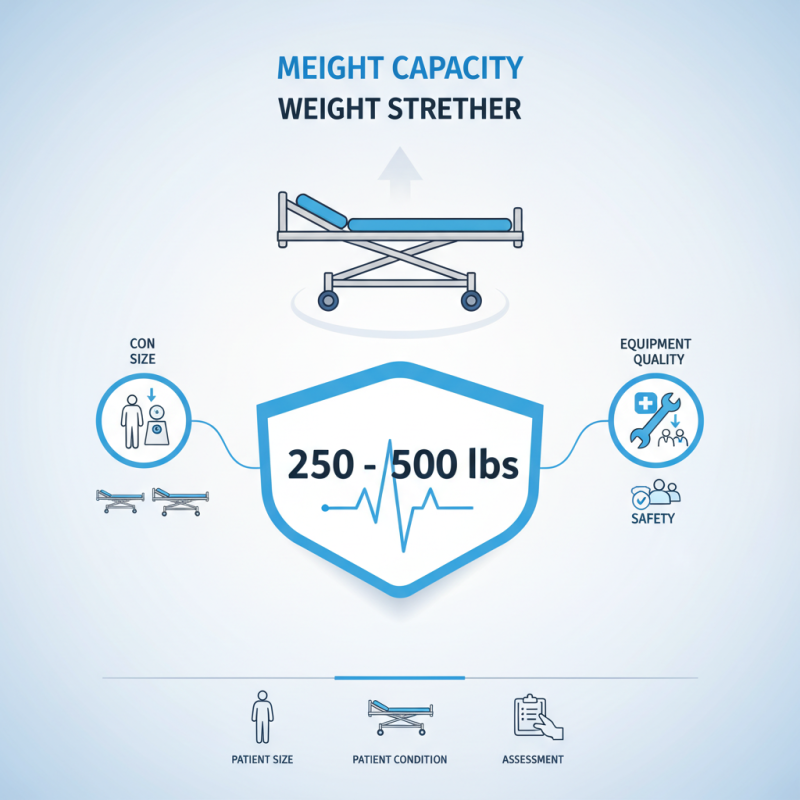
Typically, standard stretchers can hold between 250 to 500 pounds. This range allows for safe transport of most patients. However, practitioners must consider numerous factors. The weight limit may vary based on the stretcher model. In some cases, stretchers designed for heavy-duty use can support even more weight.
Ultimately, it is vital to assess individual circumstances. Evaluating patient size, condition, and equipment quality will influence choices during emergencies. Remember, the weight limits are guidelines. Relying on these standards ensures the safety of both patients and medical staff.
Medical stretchers are essential in emergencies. Their primary purpose is to safely transport patients. Different types of stretchers are available, each designed for specific environments and patient needs.
Standard medical stretchers typically have a weight capacity ranging from 250 to 650 pounds. In a study published by the Journal of Emergency Medical Services, it was noted that the most common stretchers hold up to 500 pounds. This capacity ensures safety and effectiveness in high-pressure situations. However, the variance in design can lead to confusion. The choice of a stretcher must align with patient size and medical requirements.
Stretchers come in various forms. Manual stretchers, often used in ambulances, emphasize portability. Folding stretchers are convenient for quick storage. Specialized stretchers, like bariatric models, cater to heavier patients. Each type must meet specific safety standards for reliability. Yet, there are often overlooked factors, such as ensuring staff are trained properly to handle different stretcher types. The need for continued education in proper usage cannot be overstated. Adhering to these essentials enhances safety in patient transport.
When it comes to standard medical stretchers, the weight capacity typically ranges from 250 to 800 pounds. This variance is primarily influenced by the stretcher's design and intended use. A lightweight stretcher may hold around 250 to 350 pounds. However, a bariatric stretcher, specifically designed for larger patients, can often support weights up to 800 pounds.
The materials used are crucial in determining strength. Aluminum and high-strength steel are common options. A study from the Emergency Medical Services (EMS) sector indicates that the average load on stretchers during emergencies often reaches around 350 pounds. This data underscores the need for stretchers to endure significant stress while ensuring patient safety.
While the capacity numbers can sound reassuring, various factors affect actual performance. Improper handling and maintenance can diminish structural integrity. Regular inspections are vital in ensuring stretchers remain safe and reliable. The EMS community frequently reviews incidents where equipment failure caused harm, highlighting the need for ongoing education and attention to equipment standards.
The weight capacity of a standard medical stretcher typically ranges from 300 to 700 pounds. Various factors influence this limit. The materials used in construction play a crucial role. Sturdy aluminum frames offer greater support compared to other materials. This ensures both durability and the ability to bear heavy loads.
Equally important is the stretcher's design. A wider base can enhance stability, allowing for safer transportation of heavier patients. Certain stretchers feature additional reinforcements for extra strength. However, not all models provide this level of support. Choosing a stretcher without understanding its specifications may lead to hazardous situations.
Maintenance practices also affect a stretcher's weight capacity. Regular inspections can identify wear and tear. Ignoring these signs may result in unexpected failures when the stretcher is needed most. Although stretchers are designed to support significant weight, their limitations must not be overlooked. Making informed choices is vital for the well-being of patients and caregivers alike.
Medical stretchers are vital for patient transport in emergencies. Their weight capacity is a critical factor, dictated by safety standards and regulations. Typically, a standard stretcher can support 500 to 700 pounds, ensuring it accommodates various patients effectively.
Organizations like the National Fire Protection Association (NFPA) and the American National Standards Institute (ANSI) set guidelines for these medical devices. These regulations help manufacturers design stretchers that maintain structural integrity while providing safety for both patients and medical personnel. However, adherence to these standards varies. Some devices may fall short, posing risks during a critical transport.
It’s crucial to understand that while most stretchers meet requirements, real-world conditions can challenge their limits. Factors such as uneven surfaces or improper use can compromise safety. Regular training for medical staff enhances safe stretcher handling. Awareness is key; rigorous inspections should not be overlooked. A non-compliant stretcher can jeopardize patient outcomes and staff safety.
| Stretcher Type | Maximum Weight Capacity (lbs) | Standard Compliance | Common Usage |
|---|---|---|---|
| Manual Stretcher | 350 | ANSI/ISO 8185 | Emergency Services |
| Electric Stretcher | 500 | FDA Approved | Hospitals |
| Stay-in-Place Stretcher | 800 | ISO 13485 | Ambulances |
| Bariatric Stretcher | 1000 | ANSI/RESNA WC-1 | Obesity Care |
When transporting patients, safety is a priority. Medical stretchers are essential tools in healthcare. The maximum weight capacity varies but commonly ranges from 350 to 700 pounds. However, identifying the stretcher's limit is just the beginning.
Best practices emphasize thorough checks before each use. Ensure the stretcher is stable and free of damage. Caretakers must communicate clearly about the patient's condition. One study from the Journal of Emergency Medical Services found that improper usage can contribute to accidents, affecting both patients and staff.
Training staff on correct lifting techniques is crucial. Many injuries occur from improper handling. Strain and fatigue can lead to accidents, causing delays in care. Regular training sessions help mitigate these risks. Reflecting on these practices can improve outcomes and increase safety in patient transport.
This chart illustrates the weight capacity of various types of standard medical stretchers, indicating safe transport limits for patients.
: Medical stretchers are used to safely transport patients during emergencies.
Standard medical stretchers generally have a weight capacity of 250 to 800 pounds.
A bariatric stretcher can support weights up to 800 pounds.
Common materials include aluminum and high-strength steel for durability.
Staff training ensures safe and effective handling of different stretcher types in emergencies.
Improper handling and inadequate maintenance can diminish a stretcher's performance and safety.
Regular inspections are vital to ensure stretchers remain safe and reliable for patient transport.
Folding stretchers are designed for convenient storage and quick deployment during emergencies.
Overlooking specific training needs can lead to issues in patient transport safety.
The variety in design and intended use can create confusion in choosing the right stretcher.
When considering "How much weight can a standard medical stretcher hold," it is essential to understand the various types of stretchers available and their specific weight capacities. Typically, standard medical stretchers are designed to accommodate a range of weights, usually between 250 to 700 pounds, depending on their construction and intended use. Factors such as design materials, manufacturing standards, and patient positioning significantly influence this weight capacity.
Safety standards and regulations play a crucial role in ensuring that stretchers can safely transport patients without compromising their safety or the caregivers' efficiency. Adhering to best practices for transporting patients—such as proper securing techniques and weight distribution—enhances safety during the transfer process. Overall, understanding these aspects will ensure effective and safe patient management in medical settings.

Datoral Medical