7 Tips for Surgical Stretcher Ergonomic Requirements?

Time:2026-11-02 Author:Liam
0%

Surgical stretcher ergonomics is not a comfort upgrade; it affects how safely staff position and move patients. What are the ergonomic requirements for surgical stretchers? The answer involves more than a padded surface. Staff need controls they can reach without leaning, brakes that hold during transfers, and handles that support a neutral wrist position. Height adjustment matters, too. A stretcher set too low can turn a routine transfer into repeated bending. Small details matter.

NIOSH ergonomics researcher Thomas R. Waters has highlighted the injury risks associated with manual patient handling. A practical paraphrase of his work is to reduce unnecessary lifting through safer handling systems. That principle guides the seven tips ahead, from adjustable working height and stable casters to clear transfer paths and accessible controls. Check whether rails and accessories obstruct patient movement. Confirm that the stretcher’s stated capacity suits the intended use. Not just comfort. The fit between equipment, staff, and room layout matters.

These tips offer a starting point, not a substitute for a site-specific assessment. A busy operating room may expose problems that a product sheet cannot show. For example, a brake pedal can be technically reachable yet blocked by nearby equipment. That gap matters. The right choice should reflect actual workflows, staff feedback, and the patient transfers performed every day.
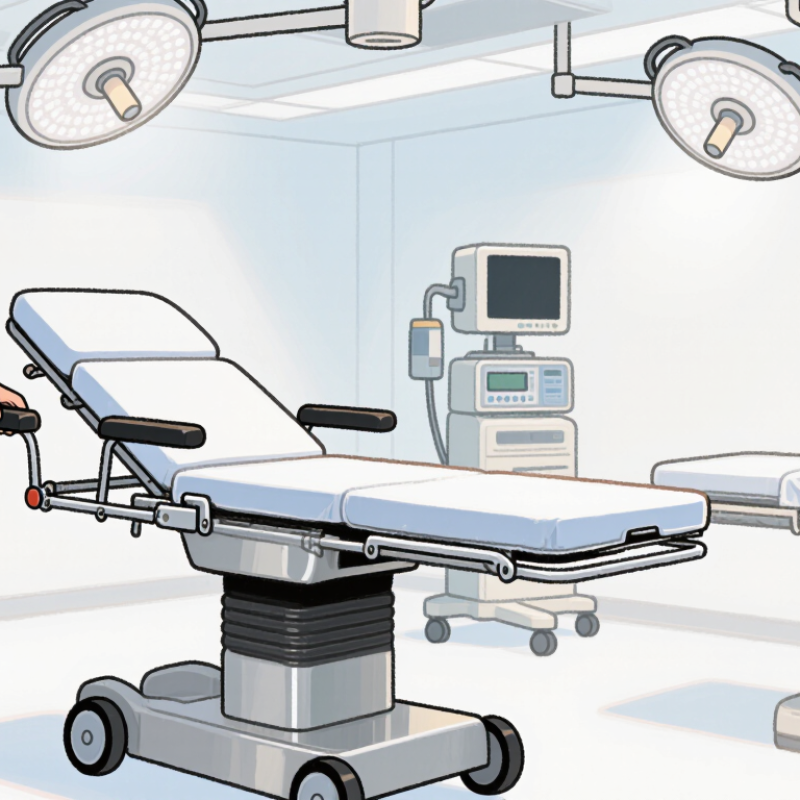
7 Tips for Surgical Stretcher Ergonomic Requirements?

Define Surgical Stretcher Ergonomics and Identify Key Staff Risks

Surgical stretcher ergonomics means fitting the stretcher, its controls, and transfer process to staff and patient needs. The aim is to limit forceful pushing, awkward reaches, and repeated bending during transport and positioning. A stretcher set too low can strain backs; a poorly placed brake pedal may prompt staff to twist. Risks rise during transfers, especially when space is tight or the patient cannot assist. Small design details matter.

OSHA’s review of 2010 Bureau of Labor Statistics data reported

249 musculoskeletal-disorder cases per 10,000 full-time workers among nursing aides, orderlies, and attendants—nearly seven times the rate for all workers.

These figures are not specific to surgical teams, but they underline the risks of patient-handling work. NIOSH guidance also emphasizes reducing manual lifting and improving handling practices. Check whether staff can adjust stretcher height without reaching, steer it with a neutral wrist, and access brakes without bending. Test these actions in real corridors, not just an empty room. That distinction is easy to miss. Even a well-designed stretcher cannot compensate for rushed transfers, poor maintenance, or training that overlooks smaller staff members. Teams should observe actual use and revise routines when discomfort appears; the first assessment may get it wrong.

Set Stretcher Height to Support Neutral Posture During Patient Transfers

Set the surgical stretcher height to keep the caregiver’s shoulders relaxed and elbows near the body during transfers. When possible, align the stretcher surface closely with the receiving bed, following facility procedures and the patient’s transfer plan. Check for uneven floors, raised bed rails, or equipment that could affect alignment. Small height differences can make a transfer harder than expected.

Tip: Before moving the patient, adjust the stretcher and confirm that brakes are engaged. The caregiver should avoid reaching across a wide gap or lifting with a twisted torso. A second trained staff member or transfer aid may be appropriate, depending on the patient’s mobility and local protocol. Pause if the setup feels unstable.

Tip: Recheck the height when the task changes. A setting that works for a lateral transfer may not suit repositioning or access to a procedure area. Staff height and patient needs also vary, so one fixed setting will not fit every situation. This part can be overlooked during a busy shift. Take a moment to reset the stretcher rather than adapting posture around it. If discomfort persists, review the setup with an ergonomics or clinical safety specialist.

7 Tips for Surgical Stretcher Ergonomic Requirements? - Set Stretcher Height to Support Neutral Posture During Patient Transfers

Tip Ergonomic requirement Practical check Example target or action
1. Match the transfer surfaces Set the stretcher and receiving bed to similar heights before a lateral transfer to reduce reaching and sliding effort. Check the mattress surfaces at the transfer point; account for mattress thickness and compression. Aim for level surfaces, with no significant step or gap. Follow facility transfer procedures if a different height is specified.
2. Adjust height before patient handling Use the stretcher’s height adjustment to bring the work area within a comfortable reach, rather than bending or reaching across the patient. With the brakes engaged, confirm staff can work with relaxed shoulders and without sustained trunk flexion. Set the surface near the caregivers’ working height, then fine-tune it for the task and the patient’s position.
3. Keep the patient close Minimize horizontal reach during repositioning and transfer tasks; closer loads generally reduce strain on the back and shoulders. Move around the stretcher when feasible instead of leaning across it, and keep frequently used items within easy reach. Avoid reaching beyond the stretcher’s near side where possible; use an appropriate transfer aid for lateral moves.
4. Maintain neutral posture Keep the trunk upright, shoulders relaxed, wrists as straight as practical, and elbows close to the body during patient handling. Reposition feet and the stretcher rather than twisting the torso while supporting or guiding the patient. If staff must bend, twist, or reach to complete the task, pause and adjust the setup or use additional assistance.
5. Use mechanical or friction-reducing aids Reduce manual lifting and pulling by selecting transfer equipment suited to the patient, task, and clinical environment. Check the aid’s condition, compatibility, weight capacity, and required number of caregivers before use. Consider a slide sheet, transfer board, or powered transfer device when indicated by the patient assessment and local protocol.
6. Secure the equipment and manage lines Prevent unintended stretcher movement and avoid pulling, trapping, or disconnecting clinical lines during transfer. Engage brakes, verify bed and stretcher stability, and assign responsibility for monitoring tubes, drains, and cables. Before moving the patient, confirm brakes are set and lines have sufficient slack and a clear route.
7. Plan the move and reassess Match the staffing and equipment to the patient’s mobility, body size, cooperation, and clinical condition. Agree on roles and a clear count before moving; stop if the setup is unstable or staff cannot maintain safe posture. Recheck stretcher height, brakes, transfer aid, and patient comfort after positioning and before transport.

Use these points as general ergonomic guidance. Follow the stretcher manufacturer’s instructions, patient-specific assessment, and facility safe patient-handling protocols.

Position Rails, Mattress, and Controls for Safe Patient Handling

Safe patient handling starts with equipment that fits the task and the caregiver. Before moving a patient, check the stretcher’s working load, wheel locks, and adjustment functions. Position side rails to support the patient without blocking transfers or creating pressure points. Small gaps matter. Follow the stretcher’s instructions and your facility’s procedures, since rail use depends on the patient and situation.

Tips: Set the mattress height near the caregiver’s hip level for transfers, then lower it for transport when appropriate. A mattress should support the patient evenly, with no curled edges or exposed gaps. Check that its surface is dry and secure. Place frequently used controls where staff can reach them without leaning across the patient. Keep hand controls clear of bedding, and confirm that staff know which switch raises or lowers each section.

Pause before moving. Ask whether the patient can assist, and explain the next step in plain language. Test brakes before a transfer, and watch for tubing that could snag on a rail or control. These checks take time, and real rooms can be cramped. Reassess the setup when the patient’s mobility, size, or condition changes.

Apply NIOSH’s 23 kg (51 lb) Lift Limit to Ideal Manual Lifting Tasks

A surgical stretcher’s ergonomic review should start with the task, not its catalog weight. NIOSH’s 23 kg (51 lb) Recommended Weight Limit applies to ideal two-handed lifting conditions, with the load close to the body and little twisting. It is not a universal safe ceiling. Real work is rarely ideal.

Measure the heaviest component staff routinely handle, such as a mattress section or removable accessory. Then note hand height, reach, lift distance, grip quality, twisting, and how often the lift occurs. These factors can lower the task-specific recommended limit. An 18 kg component may still pose a concern if it sits below knee height or must be lifted repeatedly across a stretcher frame. Small details matter.

Watch an actual changeover, not just a demonstration. A narrow gap, raised rail, or damp glove can change the grip and posture. Adjustable stretcher height, accessible handles, and transfer aids may reduce manual handling, but staff still need training and a clear workflow. Record awkward moments too. They are easy to overlook, and observations from one shift may not represent every task. Recheck after equipment or procedures change.

Check Brakes, Mobility, and Applicable Stretcher Safety Standards

A surgical stretcher supports safer work when it moves smoothly, adjusts predictably, and remains stable during transfers. Before use, check that each brake engages and releases cleanly. Press the frame gently after locking; it should not roll or rock. Inspect caster wheels for hair, lint, or damage that could cause sudden resistance. Small defects matter.

Tips: Lock the brakes before transfers. Check height controls and side rails. Push from the designated handles, and keep the route clear. Test mobility with the stretcher unloaded. Then reassess it with the expected patient load, following facility procedures.

Applicable stretcher safety standards depend on the equipment type and location. Confirm current requirements with your facility’s safety or biomedical team, and follow the stretcher’s instructions for use. Check rated load limits, locking mechanisms, rail operation, and inspection records. A standards label alone is not proof that a stretcher is ready for every task. Ergonomic fit also deserves attention: staff should be able to guide the unit without twisting or reaching awkwardly. In practice, the ideal setup can be missed during a busy shift. Pause, adjust the working height, and report any brake or mobility issue before patient use.

FAQS

What does the 23 kg (51 lb) lifting limit mean?

It applies to ideal, two-handed lifting with the load close to the body. It is not a universal safe limit.

Which stretcher parts should staff weigh?

Check the heaviest part routinely lifted, such as a mattress section or removable accessory. Record its weight.

Why can a lighter component still be difficult to lift?

Low hand height, long reach, twisting, poor grip, or repeated lifts can increase strain. An 18 kg part may still be a concern.

What should an ergonomic review observe?

Watch a real changeover. Note narrow gaps, raised rails, damp gloves, awkward reaches, and repeated lifting.

How can staff check stretcher brakes?

Engage each brake, then gently press the frame. It should not roll or rock. Report problems before patient use.

What should staff inspect on the wheels and controls?

Look for hair, lint, or wheel damage. Check height controls and side rails. Small defects matter.

How should stretcher mobility be tested?

Test it unloaded, then reassess with the expected patient load. Follow facility procedures and keep the route clear.

Do safety standards guarantee a stretcher is ready for every task?

No. Check current requirements with the facility safety or biomedical team. Review load limits, locks, rails, and inspection records.

How often should the ergonomic review be repeated?

Recheck after equipment or procedures change. One shift may not show every awkward moment. I may have missed some.

Conclusion

What are the ergonomic requirements for surgical stretchers? They center on reducing strain for staff while keeping patients stable and comfortable during transfers and procedures. A stretcher should adjust to a height that allows caregivers to maintain a neutral posture, avoid excessive reaching, and work without unnecessary bending. Properly positioned side rails, a supportive mattress, and easy-to-reach controls can make patient handling safer and more efficient.

Manual lifting should be minimized. The NIOSH 23 kg (51 lb) limit applies to ideal lifting conditions, so actual safe loads may be lower when posture, reach, frequency, or the patient’s movement creates additional risk. Use team assistance or transfer equipment when needed. Before use, check that the brakes hold securely and the stretcher moves predictably. Regularly assess its condition and follow applicable safety standards to support reliable operation and reduce the risk of staff injury.

Liam

Liam

Liam is a dedicated marketing professional with a profound expertise in the industry, where he excels at highlighting the unique advantages of our core products. With a keen understanding of market trends and consumer needs, Liam frequently updates our company’s professional blog, providing......